Common Fern Genus Characteristics
A quick reference
Noting the name, meaning, number and distribution of species and a brief description.
- ADIANTUM
Adiantum – 232 species, mostly tropical, worldwide; terrestrial – common name: maidenhair
Etymology: Greek adiantos, unwetted, for the glabrous leaves, which shed raindrops
Fronds: evergreen or deciduous, foliage delicate, lacy, often drooping, thin textured, monomorphic
Pinna: pinna fan or wedge shaped; lacking a distinct midrib
Rachis: stipe is brittle thin wirey, frequently black or red black
Sori: around the outer edges covered with a false indusium of curled segments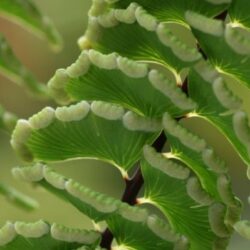
Adiantum Fern Charact 2 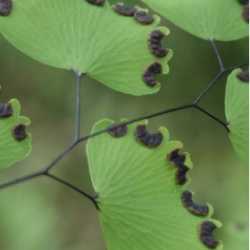
Adiantum Fern Charact 1 - ARACHNIODES
Arachniodes – 69 species, mostly tropical & subtropical; terrestrial – common name: holly fern, bristle fern
Etymology: Greek arachnion, spider’s web, and -odes, having the form or nature of. It has been suggested fungal hyphae or spider webs were seen on the original material
Fronds: evergreen, deltate or pentagonal, papery to somewhat leathery, monomorphic
Pinna: distinctive wing-like pinnae at the bottom of the frond
Rachis: shares continuous grooves from rachis to costae with Dryopteris
Sori: shares the kidney-shaped indusia with Dryopteris
Veining: Bristle-like, terminus at the ends of veins, a feature shared with many Polystichum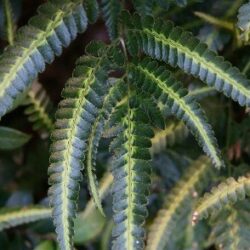
Arachniodes Fern Charact 1 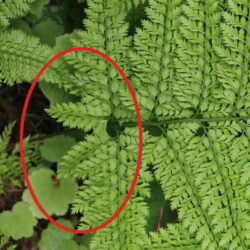
Arachniodes Fern Charact 2 - ASPLENIUM
Asplenium – 719 species – worldwide; terrestrial and epiphytic – common names: spleenwort, bird’s nest fern, walking fern
Etymology: Greek splen, spleen thought by Dioscorides to be useful for treating spleen diseases
Fronds: evergreen, vary variable from simple to very divided, monomorphic
Rachis: stipe is short often dark in color
Sori: sori linear in herringbone pattern; indusium attached to a vein opening on one side (clamshell
fashion) or in species once considered PHYLLITIS with sori opening through a central split like a buttonhole.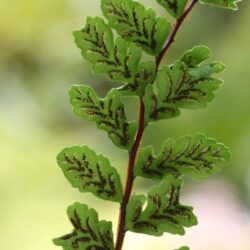
Asplenium Fern Charact 1 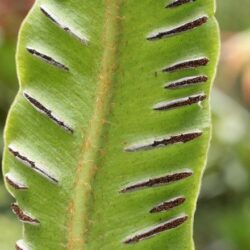
Asplenium Fern Charact 2 - ATHYRIUM
Athyrium -199 species – temperate and tropical; terrestrial – common name: lady fern
Etymology: Greek athyros, doorless the sporangia only tardily push back the outer edge of the indusium
Fronds: deciduous, typically long thin textured, monomorphic
Rachis: Stipes usually stout and succulent grooved in a “V” shape; green or straw colored and long
Sori: sori central with half-moon to “J” shaped indusium opening along one side.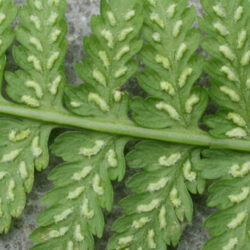
Athyrium Fern Charact 2 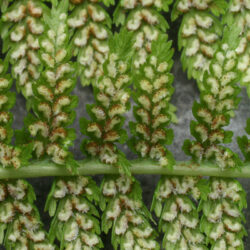
Athyrium Fern Charact filix-femina- RAS 6-2013-1 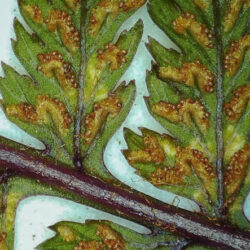
Athyrium niponicum ‘Pictum’-5 Fern Charact 3 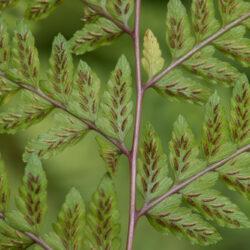
Athyrium Fern Charact 4 - BLECHNUM
Blechnum – 236 species (or 30 species, mostly in Central and South America) – temperate and tropical; terrestrial – common name: water fern, hard fern
Etymology: Greek blechnon, an ancient name for ferns in general
Fronds: Evergreen and sub-evergreen leathery; nearly all species pinnate; most hardy species are dimorphic (fertile and sterile fronds different) with fertile fronds erect, monomorphic and dimorphic on tropical and subtropical species
Sori: sori linear occupying entire space from midrib to the pinna tip of fertile frond segment; indusium linear with central lengthwise opening (slit down the middle)
(note: The Pteridophyte Phylogeny Group, or PPG, an informal international group of systematic botanists who collaborate to establish a consensus on the classification of pteridophytes currently endorses splitting the genus into 18 smaller genera.)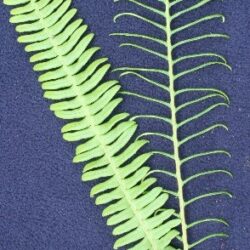
Blechnum Fern Charact 1 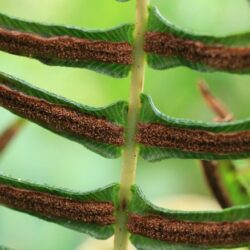
Blechnum Fern Charact 2 - Cheilanthes
Lip fern – 150 species – temperate, tropical and arid – stipes short, brittle, dense in growth; tufted; often scaly or hirsute; foliage evergreen also hairy or with scales on the underside; pinnae beadlike; prefers dry rocky locations; will curl in drought revive with moisture; sori marginal covered with reflexed edge of pinna but not continuous around the edge.
- Coniogramme
Coniogramme, Bamboo fern is in the Pteridaceae family with about 50 accepted named species in the genus. The name is derived from conio, dusky and gramme, line in reference to the soral pattern. The genus coniogramme is mostly stoloniferous and is slow to spread, forming a small evergreen patch of broad dark-green pinnate fronds, stipes are grooved, sori without indusia run along the veins from the midribs towards the margins. Only a few species are temperate. Prefers dappled to light shade and moist soil. Comes up late in growing season.
- Cryptogramma
Hidden sori – 11 species – mostly temperate; small evergreens with light colored stipe; rock loving; dimorphic with fertile fronds erect; sori under overlapping margins.
- CYRTOMIUM
Cyrtomium – 35 species – temperate & subtropical, terrestrial – common name: holly fern
Etymology: Greek cyrtoma, arch, for the arched veins
Fronds: Evergreen pinnate bold leathery foliage; monomorphic
Pinna: In some cases, an upward ear at the base of the pinnae similar to Polystichum. Terminal pinna similar to the lateral ones
Rachis: it shares the grooves continuous from rachis to costae with Dryopteris.
Sori: sori central with peltate (umbrella like) indusium like Polystichum, in rows of 2 or more between mid-rib and margin, unlike Polystichum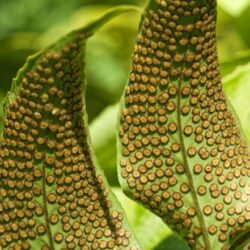
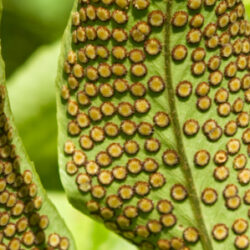
Cyrtomium Fern Charact 3 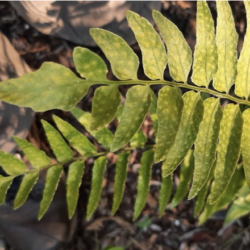
- CYSTOPTERIS
Cystopteris – 19 species – temperate; terrestrial – common name: bladderferns, fragile ferns
Etymology: Greek kystos, bladder, and pteris, fern, alluding to the indusium, which is inflated when young
Fronds: Deciduous; light green, papery texture; small delicate, monomorphic
Sori: spore black when ripe; sori on veins, round in 1 row between midrib and margin, indusium when young hood-shaped, often falling at maturity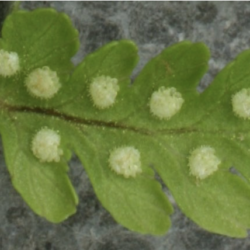
- DRYOPTERIS
Dryopteris – 346 species – worldwide; terrestrial – common name: wood fern
Etymology: Greek drys, tree (oak), and pteris, fern
Fronds: Evergreen and deciduous, small to large; sturdy; usually divided, often finely so with only a few pinnate species, monomorphic
Rachis: Continuous grooves on the upper side of stipe, rachis, and costa; scaly stipes, lack of hairs
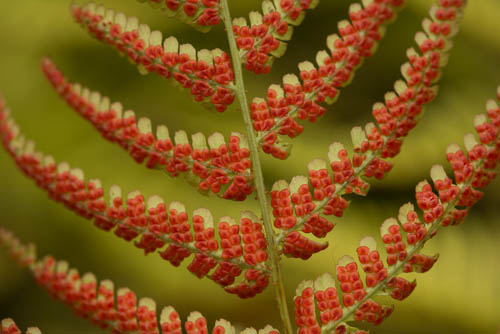
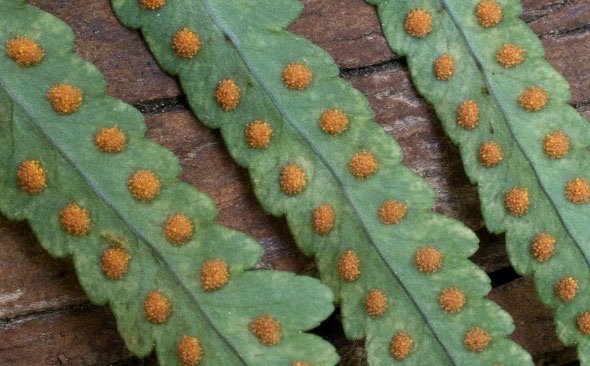
Sori: central placement on the pinna with kidney shaped indusium over a round sorus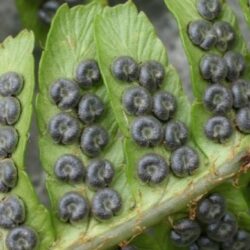
Dryopteris Fern Charact 1 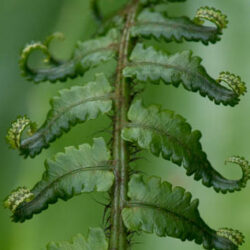
dryopteris groved stipe Fern Charact 3 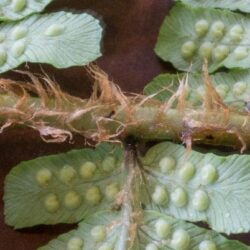
Dryopteris Fern Charact 2 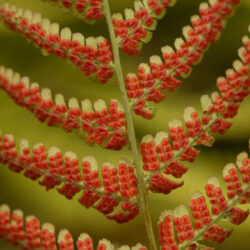
Dryopteris erythrosora sori DG-2-1 Fern Charact 4 - GYMNOCARPIUM
Gymnocarpium – 9 species – temperate; terrestrial – common name: oak fern
Etymology: Greek gymnos, naked, and karpos, fruit, referring to the absence of indusia
Fronds: horizontal triangular fronds; deciduous; thin texture; monomorphic
Rachis: Stiff brittle stipe
Stems: spreading via underground rhizomes which are black in color
Sori: round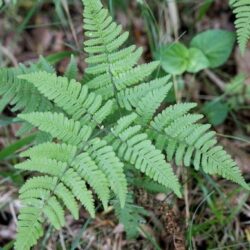
Gymnocarpium Fern Charact 1 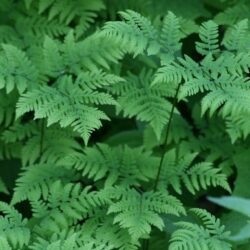
Gymnocarpium Fern Charact 2 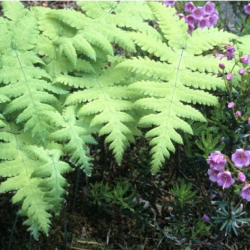
Gymnocarpium Fern Charact 3 - Lygodium
Twining – 39 species – mostly tropical; climbing ferns; sterile portion evergreen; fertile portion a continuation of the main stem and deciduous; sori on underside of fertile segments.
- MATTEUCCIA
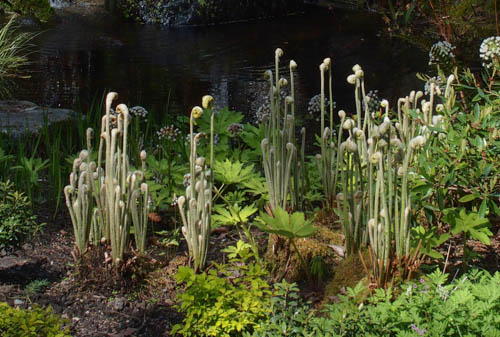
Matteuccia – formerly 3 species – temperate; terrestrial – common name: ostrich fern, this genus has now been subsumed into ONOCLEA.
Etymology: named for an Italian physicist- Notholaena
Cloak fern – false indusium – 25 species – closely allied with Cheilanthes and Pellaea – mostly arid loving small ferns with proportionately long stipes; erect inhabitants of rocky dry places; foliage frequently with hairs, scales or waxy undercoating; sori hidden in wax, scales or around edges.
- ONOCLEA
Onoclea – 6 species – Northern hemisphere and Central America; terrestrial – common name: ostrich fern, sensitive fern, now contains species formerly in MATTEUCCIA and PENTARHIZIDIUM
Etymology: Greek onos, vessel, and kleiein, to close, in reference to the sori, which are enclosed by the revolute fertile leaf margins
Fronds: deciduous. medium to very large; dimorphic
Sori: sori in persistent hard brown pods at maturity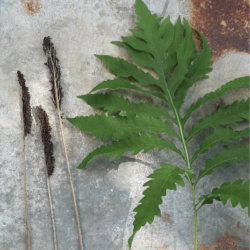
Onoclea Fern Charact 1 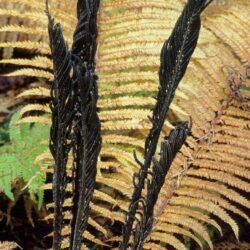
Onoclea Fern Charact 3 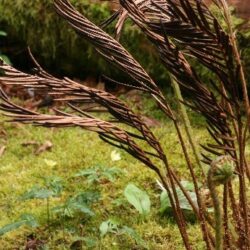
Onoclea Fern Charact 2 - OSMUNDA
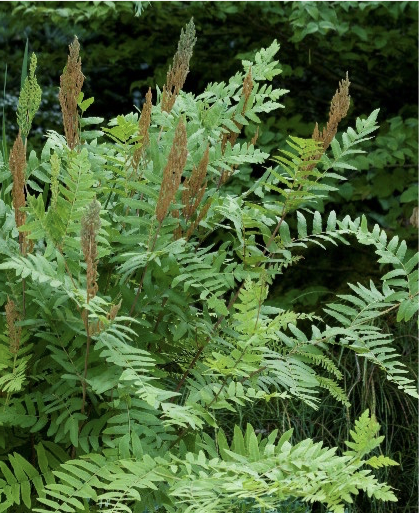
Osmunda -15 species – temperate and tropical; terrestrial – common name: royal fern
Etymology: origin of the name is unknown with many theories of origin
Fronds: deciduous primitive ferns; large, moisture loving; dimorphic
Sori: spore not on underside of leaf but on separate stalks from rachis (sometimes referred to as flowering fern due to the golden color of the maturing fertile frond on several species).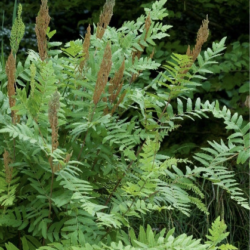
Osmunda Fern Charact 1 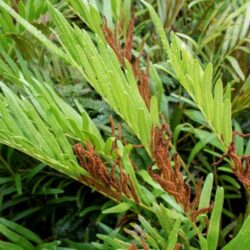
Osmunda Fern Charact 3 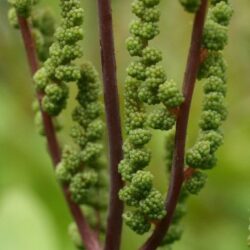
Osmunda Fern Charact 2 - OSMUNDASTRUM
Osmundastrum -1 species – temperate; terrestrial – common name: cinnamon fern
Etymology: origin of the name is unknown with many theories of origin
Fronds: deciduous, large, moisture loving; tufts of reddish hairs in the pinnae axils; fertile fronds wither soon after maturity dimorphic
Sori: spore on narrow upright fertile fronds; green when immature, golden brown (cinnamon colored) after spore drops.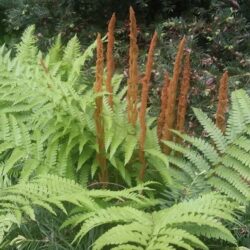
Osmundastrum Fern Charact 2 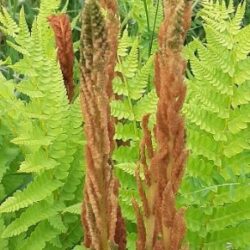
Osmundastrum Fern Charact 1 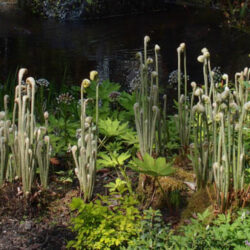
Osmundastrum-cinnamomeum-spring-BBG-Fern-Charact-3 - Pellaea
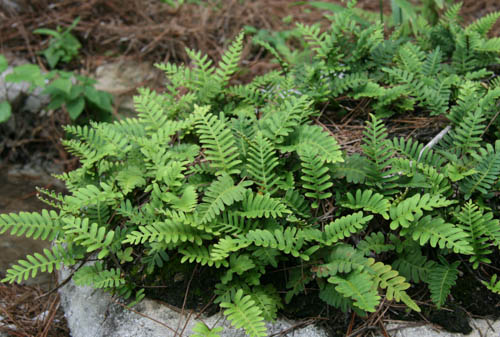
Dark, dusky – 85 species – temperate and tropical; rigid stiff stipe and frond; evergreen; often with powdery or waxy coverings; stipe dark purple; foliage usually blue; simply divided; rock ferns with long wiry roots; sori marginal; continuous under rolled edges of pinna.
- PHYLLITIS
Phyllitis – formerly 8 species – this genus is now subsumed into ASPLENIUM– common name: tongue fern, bird’s nest fern
Etymology: Greek word meaning “green leaf.”- PLEOPELTIS
Pleopeltis – 93 species- mostly tropical and subtropical, few temperate; epiphytic, rarely terrestrial – common name: scaly polypody, resurrection fern
Etymology: Greek pleos, many, and pelte, shield, in reference to the peltate scales covering immature sori
Fronds: pinnata; very similar to Polypodium but can be separated by the peltate scales covering the back of the frond monomorphic
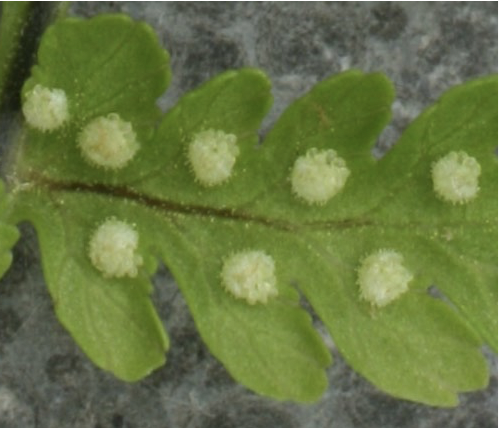
Sori: round, no indusium, brown, yellow, or orange in color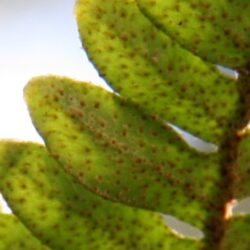
Pleopelitis Fern Charact 1 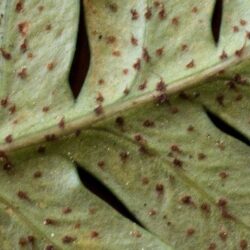
Pleopelitis Fern Charact 2 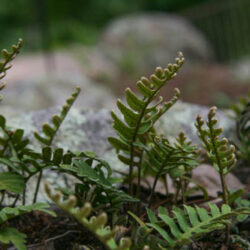
Pleopeltis polypodioides – TN Fern Charact 4- RAS 6-2011-4 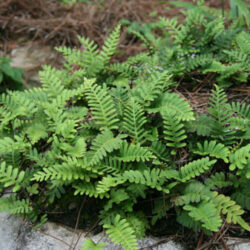
Pleopeltis polypodioides – TN Fern Charact 3- RAS 6-2011-3 - POLYPODIUM
Polypodium – 58 species – widely distributed, mostly temperate; epiphytic, rarely terrestrial – common name: polypody
Etymology: Greek poly, many, and pous, podion, little foot, in allusion to numerous knoblike prominences of the stem
Fronds: evergreen or deciduous, evergreen species often with leathery leaves; usually pinnate; monomorphic
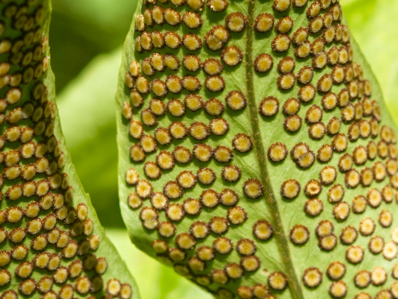
Sori: large round sori; no indusium, spores often yellow to orange in color
Stem: Prominent creeping rhizome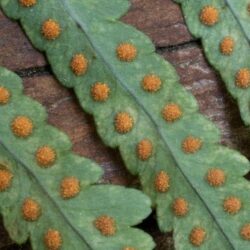
Polypodium Fern Charact 2 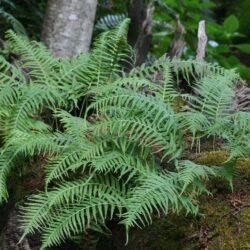
Polypodium Fern Charact 1 - POLYSTICHUM
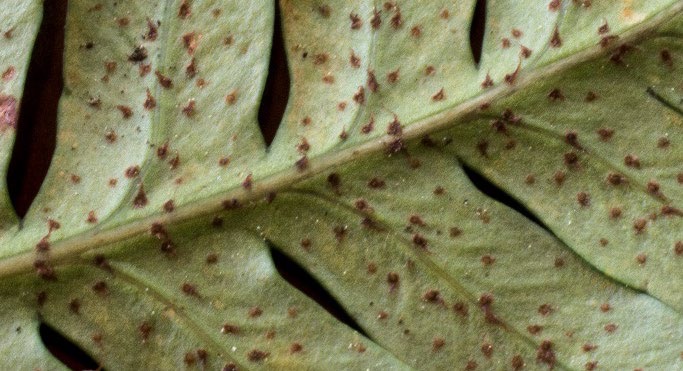
Polystichum – 388 species – worldwide; mostly temperate; terrestrial – common name: shield fern, holly fern
Etymology: Greek poly, many, and stichos, row, presumably in reference to the rows of sori on each pinna
Fronds: Sturdy evergreen growth in a single crown or cluster; pinnate to finely divided foliage; frequently with shiny foliage with bristly toothed edges; unfurling fronds the bend-over- backwards, tassel-like in form; monomorphic or weakly dimorphic
Rachis: short stipes, discontinuous grooving between rachis and costa
Sori: sori covered with peltate indusium., sori typically in 1 row (rarely 2) between midrib and margin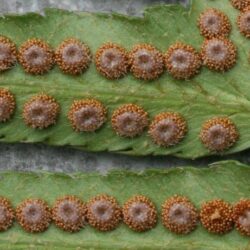
Polystichum Fern Charact 2 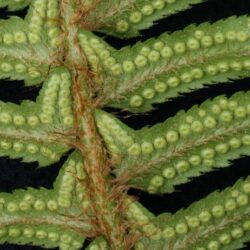
Polystichum Fern Charact 1 - PTERIS
Pteris – 329 species – widely distributed, mostly subtropical to tropical; terrestrial – common name: brake fern, table fern
Etymology: Greek pteris, fern, derived from pteron, wing or feather, for the closely spaced pinnae, which give the leaves a likeness to feathers
Fronds: evergreen or deciduous; monomorphic
Sori: continuous, submarginal, false indusium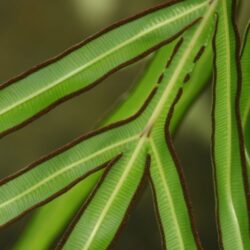
Pteris Fern Charact 1 - PYRROSIA
Pyrrosia – 63 species – Southern Hemisphere and SE Asia, mostly subtropical to tropical, few temperate; epiphytic and terrestrial – common name: felt fern
Etymology: Greek pyrros, flame-colored, in reference to the reddish lamina (leaf surface) scales of some species
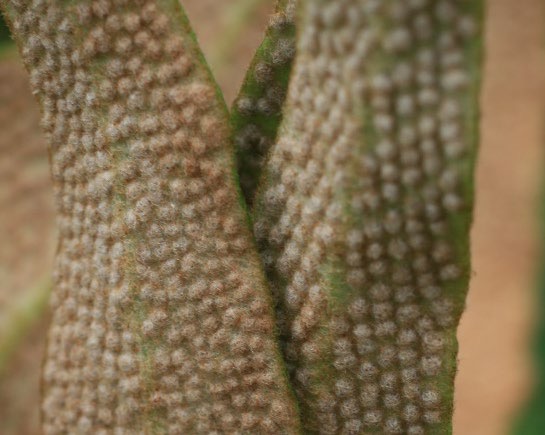
Fronds: evergreen; mostly monomorphic, stellate scales usually thickly covering the underside of the leaf
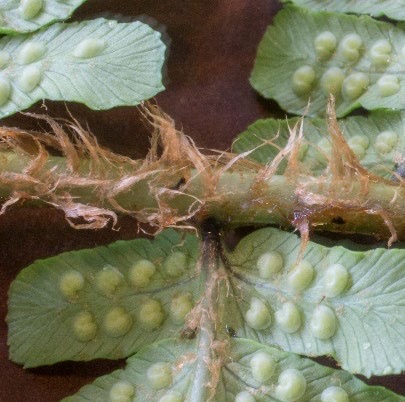
Sori: round, indusium absent
Stem: thin creeping rhizome, short of some species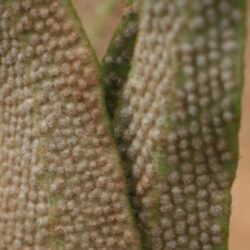
Pyrrosia Fern Charact 2 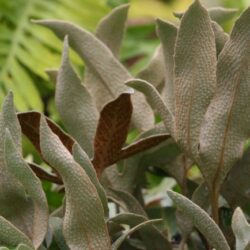
Pyrrosia Fern Charact 1 - WOODSIA
Woodsia – 54 species – temperate to arctic; terrestrial – common name: cliff fern
Etymology: for English botanist Joseph Woods
Fronds: Small deciduous ferns; monomorphic
Sori: spores brown on the outer edges of pinna; indusium fist like opening star like from under the Sporangia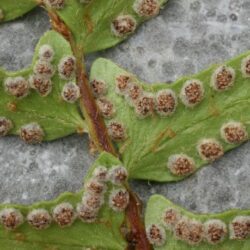
Woodsia Fern Charact 1 - WOODWARDIA
Woodwardia – 14 species – mostly temperate; terrestrial – common name: chain fern
Etymology: in honor of Thomas Jenkin 1820, English botanist
Fronds: Extremely large coarse evergreen & deciduous ferns; monomorphic
Sori: sori in long lines like strings of sausage (hence chain fern); sori linear opening in a central split.
(note: The Pteridophyte Phylogeny Group, or PPG, an informal international group of systematic botanists who collaborate to establish a consensus on the classification of pteridophytes currently endorses splitting the North American species into 2 separate single species genera.)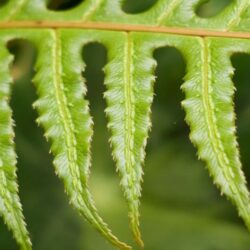
Woodwardia Fern Charact 1